Everyone has a restaurant idea. Maybe it’s that perfect biryani you make at home, or a cafe vibe you saw in Dubai and thought – this would work in Bangalore. But an idea alone doesn’t make a restaurant. What makes a restaurant work is a clear, tested, and profitable concept.
Most restaurants that shut down within a year didn’t fail because of bad food. They failed because there was no clarity on what they were trying to be, for whom, and why someone should choose them over 100 other options on Swiggy.
That’s where proper restaurant concept development comes in. It’s the process of converting your raw idea into a full business that can run, make money, and scale. Restaurant Consultants in Karnataka help entrepreneurs refine their concept, define the target audience, plan profitable operations, and build a strong foundation for long-term restaurant success.
Here’s a practical, step-by-step guide on how to develop your restaurant concept from scratch to opening day.
1. Start With Why – Define Your Core Idea Clearly
Before you think about location or menu, ask yourself a few honest questions.
What kind of restaurant do you actually want to open? What food are you truly good at? Who is your ideal customer – college students, IT professionals, families, health-conscious crowd?
Your food business concept in telangana should have one clear identity. You can’t be a cafe, a bar, a biryani house, and a continental restaurant at the same time. The most successful brands today are hyper-focused. Think of a dosa-only cafe, a pure coastal Mangalorean kitchen, a millet-based healthy bowl brand, or a charcoal kebab counter.
Write it down in one line: “We are a [type of restaurant] serving [hero cuisine] for [target audience] at [price point].”[area]
If you can’t explain your concept in one line, your customer will never understand it either. This clarity is the first and most important stage of restaurant concept development.
2. Study the Market, Don’t Guess
Your idea might sound amazing to you, but does your market actually want it?
Go on the ground. In restaurant startup planning, market research is non-negotiable. Pick 3-4 locations you have in mind. Check what kind of restaurants are doing well there on Swiggy and Zomato. What are their bestsellers? What are their price points? What are customers complaining about in the reviews?
Talk to 20-30 people in that area. Would they pay ₹350 for your gourmet burger? Do they actually need another cafe, or is there a gap for a good Andhra meals place?
This research will save you lakhs. It tells you whether to tweak your idea, change your location, or even change your pricing before you spend a single rupee on interiors.
3. Create Your Menu as a Business Tool
Your menu is not just a list of dishes. It is your most powerful business tool.
A good menu is small, focused, and profitable. Start with 15-20 dishes that you can execute perfectly every single time, even during a Sunday rush. Your hero dishes should be travel-friendly if you are planning for delivery, and they should give you at least 65-70% gross margin.
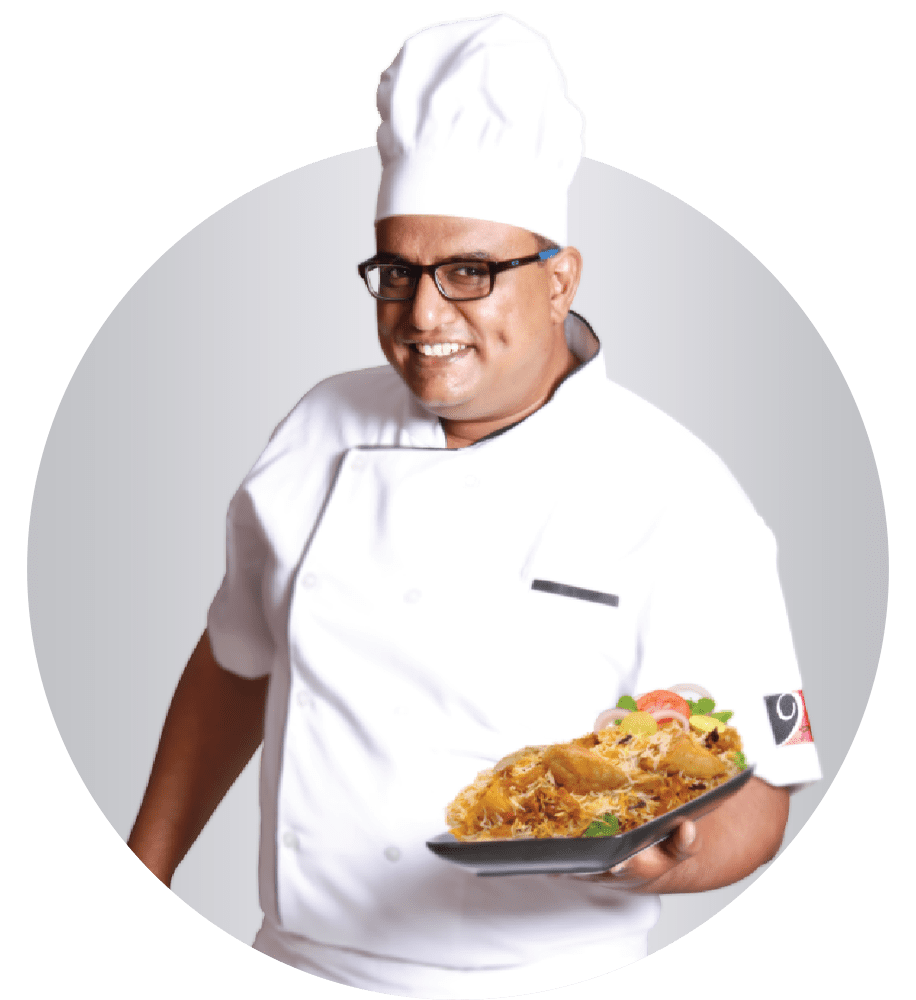
This is where professional menu engineering comes in. Every dish should have a fixed recipe card, exact portion size, exact cost, and final selling price, leaving no guesswork in the kitchen. Chef Shajahan M Abdul emphasizes that a well-engineered menu improves consistency, controls food costs, increases profitability, and creates a stronger dining experience for every customer.
When you build your menu like this, your food cost stays in control, your wastage goes down, and your customers get the same taste every time. That consistency builds trust and repeat orders.
4. Design Your Brand Story and Visual Identity
People don’t just buy food, they buy a story. Why does your restaurant exist? What’s the story behind your biryani? Is it your grandmother’s recipe? Is it inspired by your travels to Chettinad?
Your brand story should reflect in everything – your name, your logo, your packaging, your Instagram, and even the way your staff talks.
If your concept is a modern South Indian cafe, your interiors should be bright, your logo should be minimal, and your plating should be Instagram-friendly. If it’s a rustic North Karnataka jowar roti house, your space should feel earthy and homely.
Don’t make the mistake of copying someone else’s design. Your brand should look and feel like your food.
5. Plan Your Operations and Kitchen Layout
This is the part most first-time owners ignore, and it costs them the most.
Your kitchen is the engine of your business. A beautiful dining area with a poorly planned kitchen will always fail. You need to plan the flow – from receiving raw materials to storage to prep to cooking to plating to dispatch.
Your staff should not bump into each other. Raw and cooked food should never cross. The restaurant kitchen design consultant plans the kitchen around the menu, space, capacity, equipment, workflow, hygiene, and operational requirements.
This is the core of any solid restaurant business setup. Along with the layout, you need SOPs – Standard Operating Procedures – for everything. How to open the outlet, how to clean the fryer, how to pack a combo, how to handle a customer complaint. When you have SOPs, your business does not depend on one chef or one manager.
6. Do Your Numbers – The Business Plan
Liking a concept is not enough. You need to know if it makes money.
Make a simple but realistic business plan. Calculate your one-time setup cost – rent deposit, interiors, kitchen equipment, licenses, branding, initial marketing. Then calculate your monthly running cost – rent, salaries, electricity, raw materials, aggregator commissions, marketing.
Now, be practical. If your average order value is Rs. 400 and you need Rs. 6 lakhs to run the place, you need at least 50 orders a day just to break even. Can your location give you that?
This financial clarity is a major part of restaurant concept development. It tells you whether your dream can actually be a profitable business, and where you need to cut costs or increase pricing.
7. Build Your Launch Strategy Before You Open
Don’t wait till your opening day to think about marketing. Your restaurant launch strategy should start 30-45 days before you open.
Start with hype. Put up “Opening Soon” boards with your Instagram handle. Post behind-the-scenes reels of your kitchen getting ready, your menu trials, your team. Food bloggers and local influencers should be invited for a soft launch tasting 3-4 days before the main launch.
On Swiggy and Zomato, don’t launch with 60% off. It brings the wrong crowd and kills your margin. Instead, launch with a “Buy 1 Get 1” on your hero item or a free dessert on orders above a certain value. Get your first 100 reviews organically and reply to every single one.
Also, plan your first 90 days properly. The first 3 months are not for profit, they are for learning. Track your daily sales, food cost, customer feedback, and delivery times. Tweak your menu and operations based on real data.
A well-executed restaurant launch strategy can give you a strong first impression, and that first impression decides whether people will come back.
8. Soft Launch, Learn, and Then Go Big
Never do a grand opening on Day 1. Always do a soft launch for 7-10 days. Invite only 30-40 people a day – friends, family, people from the neighbourhood. Cook at 50% capacity. See where your kitchen gets stuck, where your service is slow, what customers are saying.
Fix all those issues, train your team better, and then do your grand launch with a full marketing push.
This phased approach is what smart owners follow in professional restaurant startup planning. It reduces chaos and gives your team confidence.
Conclusion
Developing a restaurant from an idea to a launch is not about luck. It is about a system. From your initial thought to your market study, your menu, your branding, your kitchen, and your launch – every step should be connected.
When your concept is clear, your numbers are right, and your operations are strong, you don’t just open a restaurant, you build a brand that can grow into 2, 3, or even 10 outlets. Our completed restaurant kitchen design projects demonstrate practical layouts tailored to different restaurant concepts, menus, capacities, and operational needs.
So, if you are serious about your dream, don’t rush into interiors and equipment. Invest time in proper restaurant concept development. That one decision will be the difference between a restaurant that shuts down in 6 months and one that people talk about for years.
Remember, a great food business concept is not the one that YOU love the most, it’s the one that your CUSTOMER loves and pays for again and again.
frequently asked questions
1. How long does it take to develop a restaurant concept from idea to launch?
On average, it takes 3 to 6 months. This includes 1 month for market research and concept finalization, 1-2 months for restaurant business setup including location and licenses, and 1-2 months for kitchen setup, hiring, and trial runs. Rushing this process is the biggest reason for failure.
2. What is the most important part of restaurant concept development?
Clarity. Many people try to please everyone with a huge multi-cuisine menu. The best concepts are focused – one cuisine, one target audience, one clear price point. If your concept is crystal clear, everything else like menu, branding, and marketing becomes much easier.
3. How much investment is needed for restaurant startup planning?
It depends on the format. A cloud kitchen can start from Rs. 10-20 lakhs, a small QSR or cafe from Rs. 20-40 lakhs, and a casual dine-in from Rs. 40 lakhs to 1 crore. Your business plan should always include 3 months of working capital extra.
4. Can I have multiple cuisines in my food business concept?
You can, but it’s risky in the beginning. Multi-cuisine works only if you have a very experienced kitchen team and a large space. For new entrepreneurs, starting with one specialized cuisine gives better control on taste, cost, and operations. You can always add a second virtual brand from the same kitchen later.
5. What is included in a good restaurant launch strategy?
A good launch is not just an opening day offer. It includes pre-launch buzz on Instagram, influencer tastings, Swiggy/Zomato listing with great photos, launch offers that protect margins, and a plan to get your first 100 reviews quickly. After launch, it should also include daily tracking of sales, food cost, and customer feedback.